There’s something quietly fascinating about how electric vehicles are no longer just a metro-city trend in India. A few years ago, spotting an EV outside cities like Delhi or Bangalore felt rare—almost like a novelty. But now, even in tier-2 cities like Indore, Jaipur, Coimbatore, or Lucknow, EVs are slowly but surely finding their way onto the roads. The real question, though, isn’t about adoption anymore. It’s about whether the infrastructure is keeping up.
The Shift Beyond Metro Cities
India’s EV story isn’t confined to urban elites anymore. Rising fuel prices, growing environmental awareness, and government incentives have nudged people in smaller cities to consider electric mobility. It’s not uncommon now to see a family in a tier-2 city opting for an electric scooter for daily commuting or even exploring EV cars as a long-term investment.
But enthusiasm alone doesn’t build an ecosystem. Charging infrastructure is the backbone of any EV revolution, and that’s where things get a bit… complicated.
Related readingWhen Your Car Gets Smarter Overnight: The Real Story Behind OTA Updates
Charging Stations: Present but Patchy
If you look at the data, India’s EV charging network has expanded significantly over the past couple of years. However, most of this growth is still heavily skewed toward metro regions. Tier-2 cities are catching up, but not at the same pace.
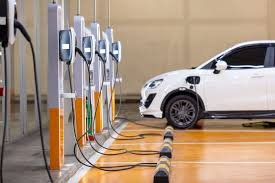
In cities like Chandigarh or Kochi, you’ll find a decent number of public charging stations, often installed in malls, parking lots, or fuel stations. But in many other places, the availability can feel inconsistent. One area might have a fast charger, while another—just a few kilometers away—has none.
This uneven distribution creates a sense of uncertainty for EV owners. You’re constantly planning your routes, checking apps, and hoping the charger you’re heading toward is actually working.
Related readingWhen Bikes Start Thinking: Where India’s Two-Wheelers Are Headed Next
Home Charging: The Real Savior?
For many EV users in tier-2 cities, home charging has become the primary solution. It’s convenient, relatively affordable, and doesn’t depend on external infrastructure. Most electric two-wheelers and even several cars are designed to be charged overnight using standard household connections.
But here’s the catch—not everyone has access to dedicated parking or stable electricity. Apartment dwellers, especially in older buildings, often struggle with installation permissions or wiring limitations. And in some regions, frequent power cuts still remain a concern.
So while home charging helps, it’s not a complete answer.
Cost vs Convenience: A Subtle Trade-Off
One interesting trend in tier-2 cities is how users weigh cost against convenience. Public fast chargers are quicker, sure, but they’re also more expensive than charging at home. In smaller cities, where cost sensitivity is higher, people tend to avoid frequent use of public chargers unless absolutely necessary.
Related readingAudi RS4 RS5 Downpipes and BMW M5 G90 G99 Secondary Downpipes: Performance Guide
This behavior impacts the viability of charging stations as a business. Lower usage means slower returns on investment, which, in turn, discourages private players from expanding aggressively in these areas. It’s a bit of a loop—less demand leads to less supply, and vice versa.
Government Push and Private Participation
To be fair, efforts are being made. Government schemes like FAME (Faster Adoption and Manufacturing of Electric Vehicles) have provided subsidies and incentives to boost EV adoption and infrastructure development. State governments are also rolling out policies to encourage charging station installations.
Private companies, too, are stepping in—setting up networks, partnering with local businesses, and experimenting with battery swapping models.
Still, execution varies widely from one city to another. Some regions move quickly, while others lag behind due to bureaucratic delays or lack of awareness.
So, How Practical Is It Really?
This brings us to the heart of the matter: EV charging infrastructure India ke tier-2 cities me kitna practical hai?
The honest answer? It depends.
If you’re someone who primarily drives within city limits, has access to home charging, and plans your usage thoughtfully—then yes, it’s quite practical. Many EV owners in tier-2 cities are already managing just fine under these conditions.
But if your routine involves frequent long-distance travel, unpredictable routes, or reliance on public charging alone, things can get tricky. The infrastructure isn’t yet robust enough to offer the same level of confidence you’d get in metro cities.
The Road Ahead
There’s a sense that we’re in a transition phase. The foundation is being laid, but it’s not fully built yet. Over the next few years, as EV adoption increases, infrastructure will likely follow—driven by both demand and policy support.
And let’s not forget how quickly things can change in India. Just a decade ago, mobile internet in smaller cities felt unreliable. Today, it’s everywhere. EV infrastructure might follow a similar trajectory—slow at first, then suddenly everywhere.
Final Thoughts
For now, owning an EV in a tier-2 city is a mix of excitement and adjustment. It’s not perfectly seamless, but it’s far from impractical. You just need a bit more planning, a little patience, and maybe a willingness to adapt.
In a way, early adopters in these cities are shaping the future. Their experiences, challenges, and feedback will ultimately drive improvements in the system. And who knows—what feels like a limitation today might just be a minor inconvenience tomorrow.
The road is being built, one charger at a time.