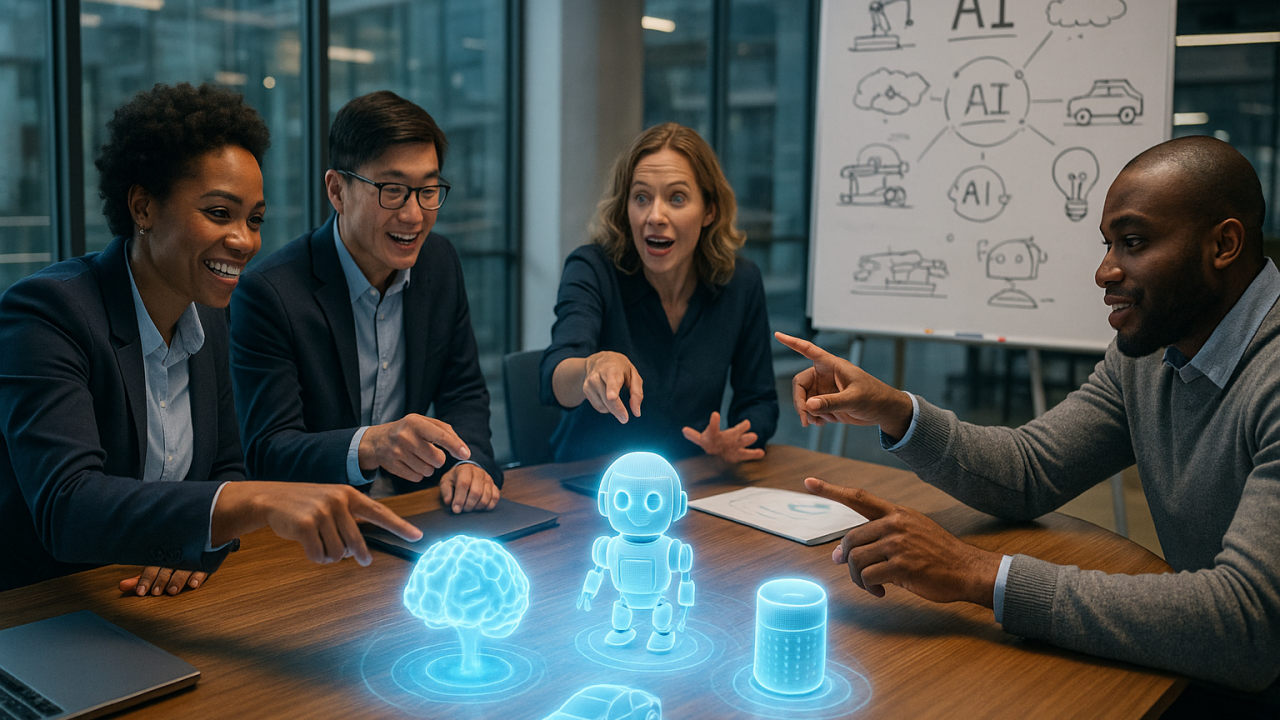
There’s something almost poetic about the idea—a physical object, process, or even an entire system, mirrored in a digital space. Not just a static copy, but something alive, constantly updating, learning, evolving alongside the real thing.
That’s essentially what digital twins are.
At first glance, it sounds futuristic. But step into certain industries today, and you’ll realize it’s already happening—quietly, efficiently, and in ways most people don’t even notice.
Understanding the Concept Without Overcomplicating It
Let’s keep it simple.
A digital twin is a virtual replica of a physical entity. It could be a machine in a factory, a wind turbine, a car engine, or even a whole building. Sensors collect real-time data from the physical object and feed it into the digital version.
Related readingSmarter in Your Pocket: How Edge AI Is Quietly Changing the Way We Use Smartphones
The result? A dynamic model that reflects what’s happening in the real world, almost instantly.
This allows engineers, operators, and decision-makers to monitor performance, predict issues, and test changes—without touching the actual system.
Why Industries Are Paying Attention
The appeal isn’t just about innovation for the sake of it. It’s about efficiency.
Related readingLife Without Passwords: Convenience or the Next Security Leap?
Imagine being able to predict when a machine is likely to fail before it actually does. Or testing a process improvement digitally before implementing it on the ground.
That’s where the conversation around Digital twins technology ka real-world use industries me becomes relevant. It’s not theoretical anymore—it’s practical, and increasingly valuable.
In sectors like manufacturing, this can mean fewer breakdowns and better productivity. In energy, it can help optimize performance and reduce waste. In construction, it can improve planning and maintenance.
Related readingGetting Into Google’s AI Overviews: What GEO Services Do That Traditional SEO Can’t
Small gains, multiplied across large systems, can lead to significant impact.
A Shift From Reactive to Predictive
Traditionally, many industries operate in a reactive mode.
Something breaks, you fix it. A system underperforms, you adjust it.
Digital twins change that mindset.
With continuous data and simulation capabilities, companies can move toward predictive maintenance and proactive decision-making. Instead of waiting for problems, they anticipate them.
It’s a subtle shift, but a powerful one.
Real-World Examples That Make It Click
Take manufacturing, for instance.
Factories are using digital twins to monitor equipment health in real time. If a machine starts behaving differently—slight vibrations, temperature changes—the system flags it early. Maintenance teams can intervene before it turns into a costly breakdown.
In urban planning, digital twins of cities are being created to simulate traffic flow, energy usage, and even environmental impact. It helps planners make better decisions without relying solely on guesswork.
Healthcare, too, is exploring this concept—creating digital models of organs or systems to understand how treatments might work.
Each use case is different, but the underlying idea remains the same: better insight leads to better decisions.
The Challenges Beneath the Surface
Of course, it’s not all seamless.
Building and maintaining digital twins requires high-quality data. And data, as we know, isn’t always clean or easy to manage.
There’s also the cost factor. Implementing these systems—sensors, software, integration—can be expensive, especially for smaller organizations.
Then there’s the question of expertise. Interpreting the data, making sense of simulations—it requires skilled professionals.
So while the potential is huge, adoption isn’t uniform across all sectors yet.
Where India Stands in This Journey
In India, digital twin technology is still in its growing phase.
Large enterprises, especially in manufacturing, infrastructure, and energy, are starting to experiment with it. Smart city initiatives are also exploring digital models to improve planning and efficiency.
But for many businesses, it still feels like a future investment rather than an immediate necessity.
That said, as technology becomes more accessible and affordable, this perception is likely to change.
Not Just About Technology, But Mindset
What makes digital twins interesting isn’t just the technology itself—it’s the way it changes how people think.
It encourages a more data-driven approach. A willingness to test, simulate, and refine before acting.
It also reduces uncertainty. Decisions are no longer based solely on past experience or intuition—they’re supported by real-time insights.
That shift can be uncomfortable at first, but it often leads to better outcomes.
A Quiet Revolution in Progress
Unlike some tech trends that arrive with a lot of noise, digital twins are evolving quietly.
They don’t demand attention. They just… work.
Improving systems, reducing inefficiencies, helping industries operate a little smarter every day.
And maybe that’s why they matter.
Because not every revolution needs to be loud. Sometimes, the most meaningful changes happen in the background—steady, consistent, and hard to ignore once you notice them.
Looking Ahead
As industries continue to digitize, the role of digital twins will likely expand.
More data, better models, improved integration—it all points toward a future where virtual and physical systems are more closely connected than ever before.
It won’t happen overnight. But it doesn’t need to.
Because even now, in its current form, digital twin technology is already proving one thing: understanding something deeply is the first step to improving it.