There was a time when travel meant switching off completely. Out-of-office replies, unread emails, maybe even a little guilt about what’s piling up back home. Work stayed behind, and holidays were a clean break.
That line, somewhere along the way, started to blur.
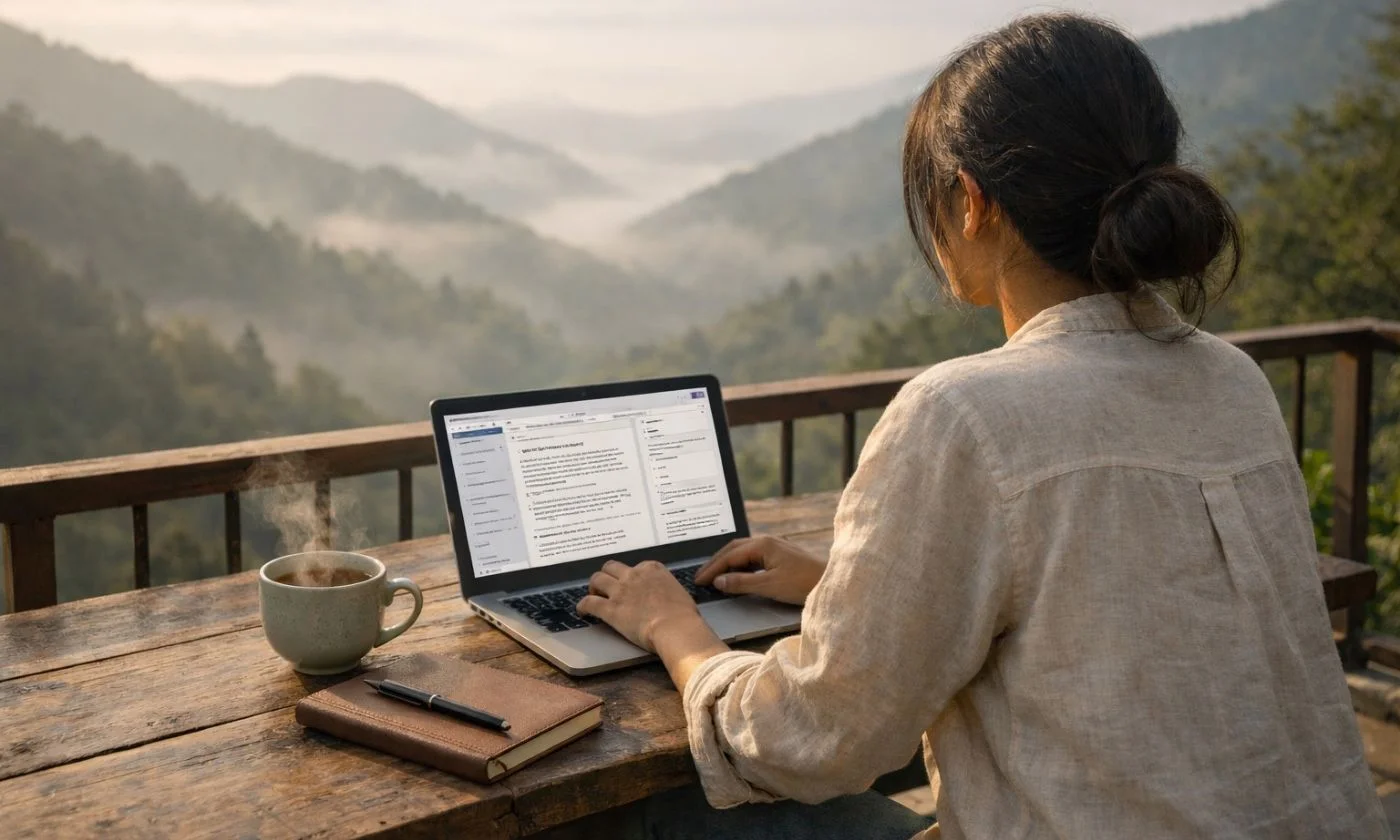
Now you’ll find people answering calls from mountain cafés, finishing presentations by the beach, or logging into meetings with a forest view behind them. It sounds romantic—and sometimes it is—but it’s also part of a larger shift in how we think about work itself.
When “Work from Home” Became “Work from Anywhere”
The pandemic didn’t invent remote work, but it definitely accelerated it. Once companies realized productivity didn’t collapse outside office walls, a quiet flexibility crept in.
Related readingTraveling Lightly: Finding Truly Sustainable Eco-Tourism in India
Employees, naturally, noticed.
If work could happen from home, why not from somewhere better? Somewhere quieter, greener, maybe even inspiring. That thought alone gave rise to the workation trend—a mix of work and vacation that feels less like an escape and more like a lifestyle experiment.
The Early Days: Trial, Error, and Instagram
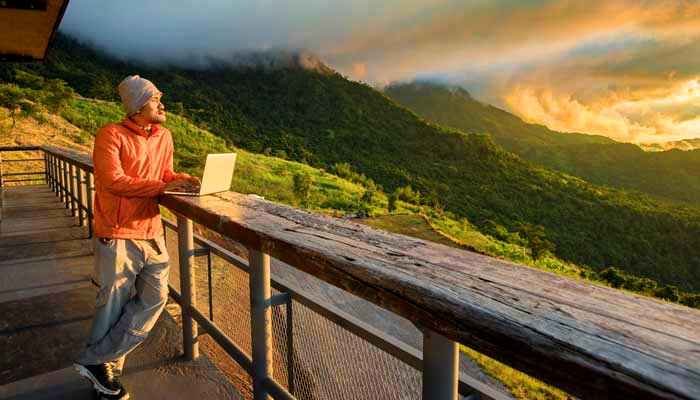
At first, workations looked a bit like curated social media posts. Scenic backdrops, laptops on balconies, captions about “living the dream.” But behind those snapshots, reality was still catching up.
Unstable internet, lack of proper workspaces, distractions—turns out, working from a hill station isn’t always as effortless as it seems.
Related readingA Backpack, a Budget, and the Road Ahead: Planning Your Solo Trip Through India
But people adapted. And so did the places.
Workations India me kaise evolve ho rahe hain remote workers ke liye?
What started as an occasional escape has now become a more structured offering.
Across India, especially in regions like Himachal, Uttarakhand, Goa, and parts of Kerala, accommodations have begun catering specifically to remote workers. Reliable Wi-Fi is no longer a bonus—it’s a basic requirement. Dedicated workspaces, power backup, ergonomic setups—they’re becoming standard.
Some properties even offer long-stay packages, community events, and networking opportunities. The idea isn’t just to host travelers, but to support a temporary lifestyle shift.
It’s no longer about “escaping work.” It’s about relocating it—briefly, intentionally.
The Appeal: More Than Just a View
Of course, the scenery helps. A lot.
But the real appeal of workations goes deeper. It’s about breaking routine without sacrificing productivity. Changing your environment can reset your mindset. You think differently, maybe even work differently.
There’s also a sense of control. Instead of waiting for annual leave, people are creating their own balance—mixing work hours with exploration, meetings with moments of stillness.
It’s not perfect, but it’s flexible. And that flexibility matters.
The Challenges No One Talks About Enough
For all its charm, workation isn’t without friction.
Maintaining discipline in a new environment can be tricky. When you’re surrounded by nature or new experiences, staying focused requires effort. Boundaries blur—work hours stretch, personal time shrinks, or sometimes the opposite happens.
Then there’s the issue of connectivity. Even today, not every “remote destination” is truly remote-work friendly. A dropped call during an important meeting can quickly ruin the experience.
And let’s not forget cost. Long stays, travel, and premium accommodations can add up, making workations less accessible for many.
Companies Are Watching Closely
Interestingly, organizations are starting to pay attention.
Some companies have begun offering workation allowances or flexible policies that support temporary relocation. Others remain cautious, concerned about productivity, coordination, and team dynamics.
The truth probably lies somewhere in between. Workations work best when there’s trust—between employer and employee—and clarity about expectations.
Without that, the model can feel chaotic.
The Rise of Micro-Communities
One of the more unexpected outcomes of the workation trend is the formation of small, temporary communities.
People from different professions, cities, and backgrounds end up sharing the same space. Conversations happen over coffee, ideas get exchanged, collaborations sometimes emerge.
It’s not quite networking in the traditional sense. It’s more organic, less forced.
And for many remote workers who miss the social aspect of offices, this becomes an added benefit.
Where Is This Headed?
It doesn’t feel like a passing trend anymore.
Workations are evolving from spontaneous decisions into planned experiences. Infrastructure is improving, awareness is growing, and expectations are becoming clearer.
At the same time, not everyone will adopt this lifestyle—and that’s okay. For some, the stability of a fixed routine still holds more value.
But for those who crave a bit of movement, a bit of change without stepping away from work entirely, this model offers something unique.
Final Thoughts
Workations sit at an interesting intersection—between freedom and responsibility, exploration and routine.
They’re not about escaping work, but about reshaping how it fits into life.
Some days, it might feel like the perfect balance. Other days, a bit overwhelming. But that’s part of the experiment.
Because in the end, maybe the question isn’t whether workations are ideal.
It’s whether we’re ready to rethink what “going to work” really means anymore.