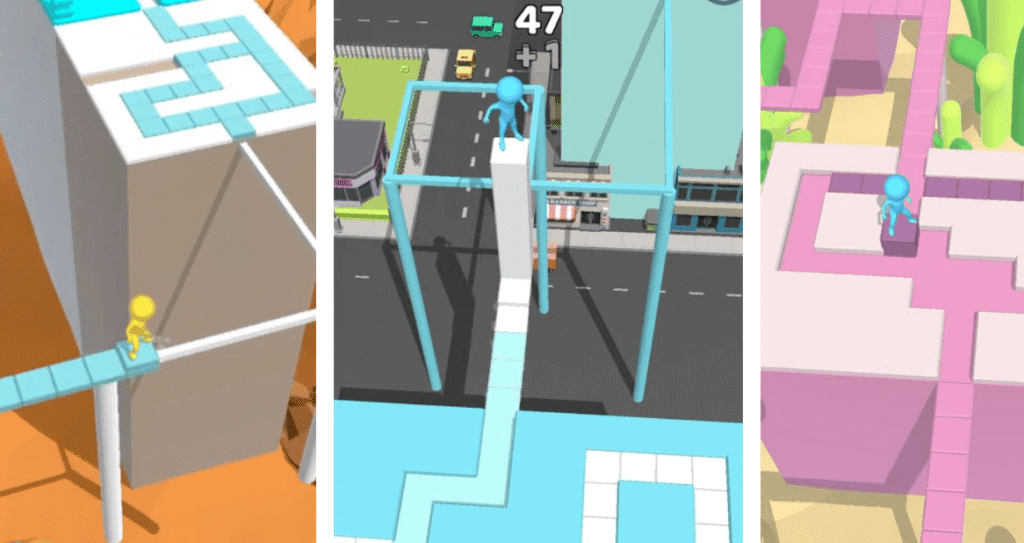
There’s a strange kind of honesty in hyper-casual games. They don’t pretend to be epic adventures or cinematic experiences. No complicated storylines, no steep learning curves—just a simple mechanic, a quick dopamine hit, and you’re in.
You tap, swipe, maybe dodge a few obstacles, and before you realize it, ten minutes are gone. Not in a dramatic, life-changing way. Just… quietly. Effortlessly.
And somehow, that’s exactly why they’ve taken over.
The Appeal of Effortless Entertainment
Let’s be honest—most of us don’t always want to “invest” in entertainment. After a long day, the idea of learning a new game, remembering controls, or committing to a storyline can feel like work.
Related readingFrom Playing for Fun to Playing for a Living: The Reality of Gaming Creators in India
Hyper-casual games remove that friction entirely.
Open the app, and within seconds you’re playing. No tutorials, no waiting. It’s almost instinctive. That accessibility is their biggest strength. Anyone, regardless of age or gaming experience, can pick them up instantly.
It’s gaming stripped down to its bare essentials—and it works.
Mobile-First, Attention-Short
The rise of hyper-casual games is deeply tied to how we use our phones today. Short attention spans, constant notifications, and the habit of filling small gaps in our day—waiting in line, commuting, even during ad breaks.
These games fit perfectly into those in-between moments.
Unlike traditional games that demand focus and time, hyper-casual titles thrive on interruption. You can play for 30 seconds, pause, and come back later without missing anything. It’s flexible in a way most other formats aren’t.
Related readingWhen Games Start Dreaming: The Quiet Rise of AI-Generated Worlds
Hyper-casual games ka craze kyun badh raha hai aur kya yeh sustainable hai?
The surge in popularity isn’t accidental—it’s engineered. Developers focus on creating simple, addictive loops that keep players coming back. Combined with aggressive user acquisition strategies and in-app ads, these games scale quickly.
But sustainability? That’s where things get interesting.
On one hand, the low development cost makes it easier to experiment. If one game fails, another can be launched within weeks. On the other hand, the lifecycle of these games is often short. What’s trending today might be forgotten next month.
Retention is the real challenge. Players download, play for a few days, and move on. For developers, this means constantly chasing the next hit.
Related readingIndian Satta and Kalyan Result: Understanding Online Number-Based Gaming
The Business Model Behind the Simplicity
What looks simple on the surface is actually backed by a very specific business model. Most hyper-casual games are free to play, relying heavily on ads for revenue.
You finish a level—watch an ad. Want an extra life—watch another ad.
It’s a trade-off players have, somewhat reluctantly, accepted. The game is free, after all. But there’s a fine line. Too many ads, and the experience becomes frustrating. Too few, and the revenue doesn’t justify the effort.
Balancing this is where successful developers stand out.
Creativity Within Constraints
Interestingly, the limitations of hyper-casual games have sparked a different kind of creativity. With minimal mechanics and short gameplay loops, developers have to think differently.
Related readingUnderstanding Number-Based Gambling: Terms, Trends, and Responsible Awareness
How do you make something engaging with just one core action? How do you keep players hooked without complexity?
Some games manage this beautifully, turning simple ideas into oddly satisfying experiences. Others feel repetitive almost instantly.
It’s a hit-or-miss space—but when it hits, it really hits.
The Role of Social Sharing and Virality
A big part of the hyper-casual boom comes from how easily these games spread. Short gameplay clips, quirky mechanics, and “just try this once” challenges make them highly shareable.
You see a clip on social media, download the game out of curiosity, and suddenly you’re part of the cycle.
This viral loop reduces marketing costs and amplifies reach. But again, it also contributes to the short lifespan. Virality fades, and so does user interest.
Where Does This Leave the Industry?
Hyper-casual games aren’t replacing traditional gaming—they’re complementing it. They serve a different purpose, cater to a different mindset.
For some players, they’re a gateway into gaming. For others, they’re a quick escape, a way to pass time without commitment.
The real question is whether developers can evolve the model. Can they create hyper-casual games with longer retention? Can they introduce depth without losing simplicity?
Some are already trying—blending hyper-casual mechanics with progression systems or light storytelling.
Final Thoughts
The charm of hyper-casual games lies in their simplicity. They don’t ask for much, and maybe that’s why we give them our time so easily.
Are they sustainable in their current form? Maybe not entirely. The constant churn, the reliance on ads, the fleeting nature of trends—it all points to a model that needs refinement.
But as a format, as an idea, they’re here to stay.
Because sometimes, all you really want is a game that doesn’t demand anything from you—just a few taps, a few moments, and a brief escape from everything else.