Most plumbing problems don’t begin with a burst pipe and water pouring across the floor. More often, there’s a warning first: the shower isn’t quite as strong, the kitchen faucet takes longer to fill a pot, or you hear an odd gurgling sound after flushing the toilet. These little changes are easy to ignore, especially when everything still seems to work.
But plumbing systems tend to give clues before they develop serious problems. A gradual restriction can affect water pressure, appliance performance, and even household energy use. Understanding what causes these changes can help homeowners deal with problems early rather than waiting for a costly emergency.
What Causes Pipes to Become Blocked?
There are several reasons clogged pipes develop. In kitchen plumbing, grease, food particles, and residue can accumulate inside drain lines. In bathrooms, hair, soap residue, and mineral deposits are common culprits.
Water supply pipes can have a different set of problems. Mineral buildup, corrosion, sediment, or deteriorating pipe materials may gradually reduce the space available for water to pass through.
Related readingBetter Water Starts With Knowing What’s Actually in It
Older plumbing systems can be particularly vulnerable. Years of mineral accumulation may narrow the internal diameter of a pipe without creating an obvious blockage. The pipe is technically still open, but water has a harder time moving through it.
And that’s where homeowners often start noticing a difference.
Why Water Pressure and Flow Aren’t the Same Thing
People often use “water pressure” and “water flow” as if they’re identical, but they’re not quite the same.
Pressure refers to the force pushing water through the plumbing system, while flow describes how much water actually moves through a fixture over a given period.
Related readingWhy Better Water at Home Is One Upgrade You’ll Appreciate Every Single Day
A restriction can reduce flow even when the incoming pressure seems normal. You might turn on the shower and still see a reasonable pressure reading, yet the amount of water coming through the showerhead is noticeably lower.
This distinction matters when troubleshooting plumbing issues. Increasing pressure isn’t necessarily the answer if the real problem is a restriction somewhere in the system.
Signs Your Plumbing May Have a Restriction
A slow faucet is an obvious clue, but it isn’t the only one.
Related readingWhat You Should Know About Whole-Home Water Filtration
Watch for:
- Weak water coming from multiple fixtures
- Showerheads that suddenly seem less powerful
- Faucets taking longer to fill containers
- Gurgling or unusual plumbing noises
- Water backing up or draining slowly
- Changes in water pressure at different times
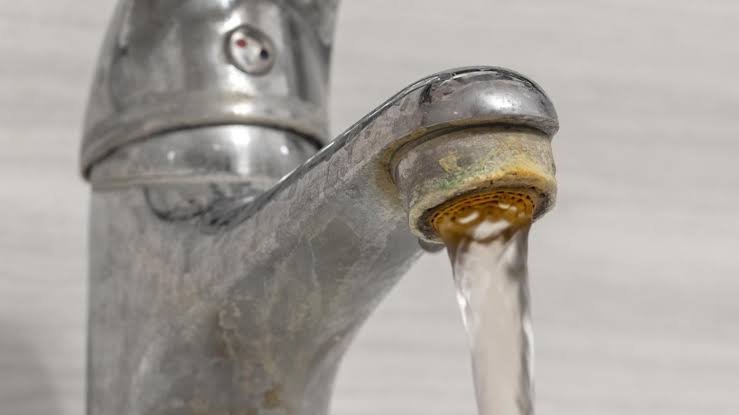
- Sediment appearing in screens or aerators
If only one fixture is affected, the problem may be local. A clogged aerator or showerhead, for example, is usually much simpler to address than a restriction in the main plumbing line.
If several fixtures experience the same issue, however, it’s worth investigating farther upstream.
How Mineral Deposits Can Restrict Plumbing
Hard water contains minerals such as calcium and magnesium. Over time, these minerals can form deposits inside plumbing components and pipes.
Related readingKeeping Your Home Water System Running Smoothly Is Easier Than You Might Think
The process tends to happen slowly, which makes it easy to overlook. You might simply assume the shower isn’t as good as it used to be.
Eventually, enough material can accumulate to narrow the passage through which water travels. This can lead to reduced water flow, particularly in older plumbing systems.
Mineral buildup can also affect water heaters, valves, faucets, and appliances. If your home has hard water and you’re experiencing repeated plumbing restrictions, a water test can help determine whether water chemistry is contributing to the problem.
Can Plumbing Problems Increase Energy Use?
At first, a clogged or restricted pipe might not seem connected to your energy bill. But water systems are interconnected.
Related readingA Practical Guide to Better Water Without Overspending
For example, a water heater may have to work harder when mineral deposits accumulate on heating surfaces. Pumps may also need to operate under more demanding conditions when water movement is restricted.
Over time, these inefficiencies can contribute to increased energy costs.
The exact effect varies considerably depending on the plumbing design, equipment, severity of buildup, and household usage. Still, keeping water-using equipment clean and properly maintained is generally good practice.
Don’t Forget About Filters and Fixtures
Sometimes the problem isn’t inside the pipe at all.
A faucet aerator can collect sediment. Showerheads can become restricted by mineral deposits. Water filters can become clogged when they reach the end of their useful life.
These are relatively easy places to start troubleshooting.
Before assuming there’s a major plumbing problem, remove and inspect aerators and showerheads where appropriate. Check filter replacement schedules. If the issue disappears after cleaning or replacing a component, you’ve likely found the source.
If the problem continues across multiple fixtures, it’s time to look deeper.
Why Regular Maintenance Matters
Plumbing maintenance isn’t particularly glamorous. Nobody wakes up excited to inspect a water heater or clean an aerator. But a few simple checks can prevent frustrating problems.
Homeowners should periodically look for leaks, inspect visible pipes, replace filters when necessary, and pay attention to unusual changes in water pressure.
If you live in an area with hard water, testing the water periodically can also be helpful. Knowing the hardness level and other characteristics makes it easier to decide whether filtration, softening, or another treatment approach is appropriate.
For older homes, a professional plumbing inspection can provide additional peace of mind.
When Should You Call a Professional?
Some plumbing issues are easy DIY jobs. Cleaning an aerator or replacing a filter is generally straightforward for many homeowners.
Other problems are better left to a qualified professional.
If multiple fixtures suddenly lose flow, you notice persistent leaks, water becomes discolored, or there’s a significant change in pressure, professional diagnosis can save time and prevent unnecessary repairs.
A plumber can inspect the system, identify restrictions, check pressure, and determine whether the problem is caused by a local fixture or something deeper in the plumbing network.
A Small Warning Can Prevent a Big Problem
Your plumbing system usually doesn’t fail without giving you some kind of warning. The trick is noticing those warnings.
A weaker shower, a slow faucet, or an unusual noise may seem like a minor annoyance, but these changes can sometimes point toward mineral buildup, sediment, corrosion, or another developing issue.
Instead of simply getting used to poor water performance, investigate it. Start with the simple possibilities, check filters and fixtures, and consider water testing if mineral buildup may be involved.
Good plumbing maintenance isn’t about constantly worrying about what might go wrong. It’s about paying attention when something changes.
And honestly, that’s often enough to turn a small plumbing headache into a small, manageable repair—rather than a much bigger one later.